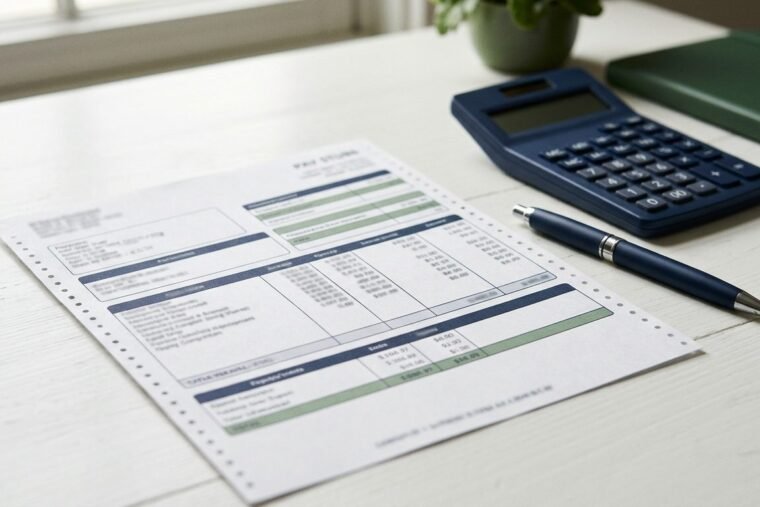
Gross vs Net Pay: What’s the Difference, With a 2026 Example
Gross pay is what you earn; net pay is what you keep. A worked 2026 example shows how a $60,000 salary becomes a real biweekly paycheck, line by line.


Gross pay is the total you earn before anything is taken out. Net pay is what is left after taxes and deductions, the amount that actually reaches your bank account. The gap between them surprises almost everyone the first time they see a real paycheck.
Gross vs net pay at a glance
| Gross pay | Net pay | |
|---|---|---|
| What it is | Total earnings before deductions | Take-home pay after deductions |
| Where you see it | Job offers, salary quotes, top of your pay stub | Bottom of your pay stub, your bank deposit |
| Used for | Loan and rental applications, comparing job offers | Budgeting your actual monthly spending |
| Includes | Wages, salary, overtime, bonuses, tips, commissions | Gross pay minus taxes, benefits and other deductions |
What comes out between gross and net
- Pre-tax deductions: traditional 401(k), health insurance premiums, HSA and FSA contributions.
- FICA: 6.2% Social Security (up to $184,500 in 2026) and 1.45% Medicare.
- Federal income tax withholding: based on your pay and W-4.
- State and local income taxes, where they apply.
- Post-tax deductions: Roth 401(k), union dues, garnishments.
Worked example: $60,000 salary, paid biweekly
Assumptions: single filer, standard deduction, no pre-tax deductions, no state income tax (as in Texas or Florida), 26 paychecks a year, 2026 tax figures.
Step 1: Gross pay per paycheck
$60,000 ÷ 26 = $2,307.69
Step 2: FICA
- Social Security: $2,307.69 × 6.2% = $143.08
- Medicare: $2,307.69 × 1.45% = $33.46
- FICA total: $176.54
Step 3: Federal income tax (estimated)
Taxable income for the year: $60,000 − $16,100 standard deduction = $43,900.
- 10% on the first $12,400 = $1,240
- 12% on the next $31,500 ($12,400 to $43,900) = $3,780
- Estimated yearly federal income tax: $5,020, or about $193.08 per paycheck
Step 4: Net pay
$2,307.69 − $176.54 − $193.08 = about $1,938.07 per paycheck, or roughly $50,390 a year.
That is about 84% of gross pay. Add a state income tax, health insurance and a 401(k) contribution, and take-home pay commonly falls to 70 to 75% of gross.
Real withholding tables spread tax a little differently than this simple estimate, so your stub may be off by a few dollars. For your exact numbers, use the IRS Tax Withholding Estimator.
How to calculate net pay yourself
- Start with gross pay for the period.
- Subtract pre-tax deductions to get taxable wages.
- Subtract FICA (7.65% of FICA wages, which may differ from taxable wages if you contribute to a 401(k)).
- Subtract federal, state and local income tax withholding.
- Subtract post-tax deductions.
When to use gross vs net
- Use gross pay when comparing job offers, applying for a mortgage, apartment or loan (lenders ask for gross), or calculating a raise percentage.
- Use net pay when building a budget, deciding how much rent you can afford each month, or planning savings.
Ways to raise your net pay
- Check your W-4. If you get a big refund every year, you may be over-withholding.
- Use pre-tax benefits you would pay for anyway, like an HSA or commuter benefits.
- Review benefit elections at open enrollment so you are not paying for coverage you do not need.
Note that contributing to a traditional 401(k) lowers net pay today, but by less than the contribution, because it also lowers your income tax.
Gross and net pay questions
Is gross pay before or after taxes?
Before. Gross pay is your total earnings before any taxes or deductions. Net pay is after.
Is salary gross or net?
Salary figures in job offers are almost always gross, meaning before taxes and benefits.
What percentage of gross pay is net pay?
It varies with income, state and benefits. Many workers take home roughly 70 to 85% of gross pay.
Do landlords use gross or net income?
Most landlords and lenders use gross income, often asking that rent be no more than about a third of gross monthly pay.